Your brother has not cried once that you have seen. Your sister wants to talk about Mom every time you are on the phone. Your father reorganized the garage the week after the funeral and has been at work every day since. You are somewhere in the middle, unsure which of you is doing it right.
None of you are doing it wrong.
Families are one of the main places grief happens, and they are also one of the main places it goes sideways. Not because anyone is grieving badly, but because everyone is grieving differently, at the same time, in close quarters, and usually without saying so.
The holidays make this harder. Thanksgiving and December put the whole family in one room, often for the first time since the funeral, and the differences that were manageable by phone become very visible across a table.
Why No Two People Grieve the Same Loss the Same Way
Each person lost a different relationship
When a parent dies, the widowed spouse loses a partner of forty years. One adult child loses the person they called every day. Another loses the parent they had a hard relationship with and never quite resolved. A grandchild loses the person who came to every game.
It is the same death. It is not the same loss. The grief follows the relationship, not the person, which is why it looks so different from one family member to the next.
People express grief in different ways
Some people grieve outwardly. They cry, they talk, they need to tell the story again and again. Others grieve through doing. They handle the paperwork, fix the house, go back to work, and process the loss privately or through action. Most people are a mix.
Both are grief. The problem is that each style tends to look like avoidance or excess to someone with the other style. The talker sees the doer as cold. The doer sees the talker as stuck. Our post onhow men tend to grievelooks at the activity-based style in detail, and it applies to plenty of women too.
Grief runs on different clocks
Grief comes in waves, and two people's waves almost never line up. One sibling is having a terrible week while another is having a decent one. Three months later it is reversed. This means people are often at their lowest exactly when someone else needs something from them.
Some grief is more complicated than others
If someone had a difficult relationship with the person who died, their grief may be tangled with anger, relief, guilt, or regret. That kind of grief often looks muted or strange to the rest of the family, and it is frequently misread as not caring. Our post onthe anger nobody warns you about in griefcovers what that can look like.
How the Roles Shift
Families run on roles, and a death rearranges them whether anyone agrees to it or not.
- The one who holds it together.Usually the person who plans the funeral, handles the estate, and checks on everyone else. They are often the last person in the family to grieve, because there is always one more thing to do first.
- The one who carries the feelings.The person who cries for everyone, who brings up the person who died, who keeps the memory in the room. They can end up feeling alone in their grief because nobody else seems to be showing it.
- The one who steps back.The person who goes quiet, visits less, avoids the house. Often misread as indifference, it is usually overwhelm.
- The one who takes over the person's role.The child who becomes the new host, the sibling who becomes the parent's main support. It can happen gradually, without anyone ever discussing it, and the person who takes it on can become exhausted.
When a parent dies and the other parent is still living, the shifts are especially sharp. Adult children often find themselves caring for a widowed parent while trying to grieve their own loss, and the relationship with that parent changes in ways that can feel like a second loss. Our post onlosing a siblingcovers a different version of this: when the person who died was the one you would have shared all of this with.
Where the Conflict Comes From
Most family conflict after a death is not really about the issue on the surface. It is about grief being misread.
Reading different grief as less love
"She hasn't even cried." "He's acting like nothing happened." "They've already moved on." These are among the most common things people say about family members after a loss, and they are almost always wrong. They mistake the outward sign of grief for the grief itself.
The belongings and the house
Decisions about the house, the furniture, the clothes, and the estate bring grief styles into direct collision. One person needs to keep everything exactly as it was. Another needs it cleared so they can stop walking into it. Neither is wrong, and both feel the other is being careless with something precious. Our post onclearing a loved one's belongingshas a framework that can help a family make those decisions without fighting over each one.
Old patterns come back
Grief tends to return families to their oldest patterns. The sibling who always felt overlooked feels overlooked again. The parent who always deferred to the person who died does not know how to make decisions. Old tensions that were managed for years come back to the surface because the person who managed them is gone.
What Helps
Name the differences out loud
The single most useful thing a family can do is say plainly that people are grieving differently. Something like: "I know we're all doing this in different ways. I've been reading your quiet as not caring, and I don't think that's fair." One honest sentence can undo months of silent assumptions.
Let people grieve in their own ways
The talker does not need the doer to start talking. The doer does not need the talker to stop. Most families do better when people are free to grieve in their own style and simply understand that others are doing the same.
Take turns with the weight
If one person has been holding everything together, someone else should take over part of it, deliberately. Split the estate tasks. Rotate who checks on the widowed parent. Make sure the person who has been strong for everyone gets a turn to fall apart.
Do not make the family the only support
Families are often asked to carry more grief than they can. Each person needs somewhere outside the family to grieve: a friend, a group, a counselor. It takes pressure off the relationships and gives people room to say things they cannot say at the kitchen table.
Talk before the holidays, not during them
If the family is going to spend Thanksgiving or December together, have the conversation about how to handle it beforehand. Who wants to talk about the person and who does not. What traditions to keep. How to give each other space. Our post onthe first Thanksgiving after a deathhas more on planning the day itself.
When There Are Children in the Family
Children and teenagers grieve differently again, and they watch closely how the adults around them grieve. A child who sees one parent crying and another parent never mentioning the person who died can conclude that the loss is either too dangerous to talk about or something they are supposed to be fixing.
Children also tend to grieve in short bursts. A child can be sobbing one minute and asking to play a video game the next. Adults sometimes read that as not caring or not understanding. Usually it is the opposite: children can only hold grief in small doses, so they step in and out of it.
A few things help:
- Tell them the truth in simple words.Children cope better with honest information than with gaps they fill with their own imagination.
- Let them see some of your grief.Seeing an adult sad and still okay teaches them that grief is survivable.
- Keep routines steady where you can.School, meals, bedtime. Predictability is calming when everything else has changed.
- Make sure each child has one adult they can talk to.In a grieving family, that may need to be an aunt, a grandparent, or a counselor rather than a parent who is barely holding on.
Our post ongrief counseling for children and teenagersgoes into what support looks like at different ages, and when a child's grief needs more than the family can give.
When a Family Needs Outside Help
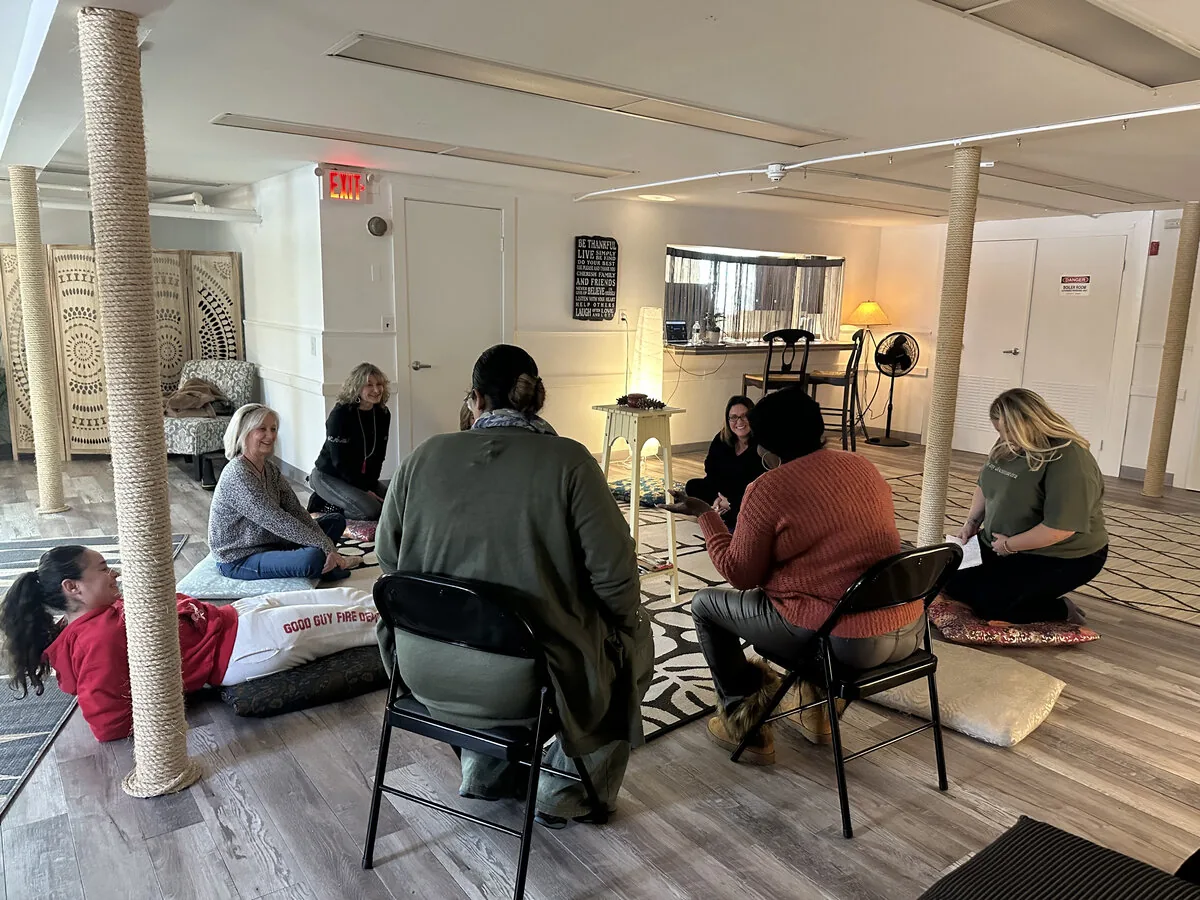
Some families work through these differences on their own. Others get stuck, especially when there are old tensions, a difficult estate, a death that was sudden or traumatic, or a child or teenager in the mix. Grief Unbound offers family sessions for exactly this, a place where everyone can be heard without the conversation turning into the usual argument. It is often useful alongside individual work, so each person also has somewhere of their own. Our post onwhat to expect in your first grief counseling sessionexplains how it starts.
If someone in the family is talking about not wanting to live or about harming themselves, call or text 988 to reach the Suicide and Crisis Lifeline, available at any hour.
Frequently Asked Questions
Why is my family fighting so much after the death?
Because grief lowers everyone's capacity at the same time, and because different grieving styles are easy to misread as not caring. Old family patterns also tend to resurface when the person who used to manage them is gone. Most families find the conflict eases once the differences are named and people stop judging each other's grief.
My sibling seems fine. Did they not love our parent?
Almost certainly they did. People who grieve through activity, or who are holding things together for everyone else, can look fine for a long time. Grief that does not show is still grief, and it often surfaces later, sometimes much later.
How do I support my widowed parent while grieving myself?
Be honest that you are grieving too, and do not try to be their only support. Encourage them to find people their own age who have been through it, such as a support group or friends who have also lost a spouse. Share the practical help with siblings or other relatives so it does not all land on one person.
What if the family was already strained before the death?
Then the grief will probably be harder, and that is not anyone's failure. A death can deepen old rifts, and it can also open a door that was closed for years. Some families find that a loss is what finally gets them talking. Others need to accept that the relationships will stay distant, and grieve that too. Either way, it helps to have support outside the family while you work out which it is.
How long does it take for a family to settle after a death?
There is no set timeline. Many families notice the hardest friction in the first year, especially around holidays, birthdays, and the anniversary, when everyone is under the most strain at once. Things often ease in the second year as roles settle, though our post onwhy the second year can be harderexplains why that is not true for everyone.
Can family counseling help even if not everyone will come?
Yes. Even one or two family members working on the pattern can shift how the whole family relates. It is common for others to join later once they see it helping.

Grief Unbound: Compassionate Support for All Types of Loss
AtGrief Unbound, we treat grief as a whole-person experience, cognitive, emotional, relational, and somatic. Our practice integrates evidence-based talk therapy with body-aware practices so we are working with grief at every level where it lives, not just the level that language can reach.
We offerindividual counseling, family support, support groups, and telehealth, serving Bergen County, NJ residents in person at 96 Allendale Road in Saddle River and clients across New Jersey by video.
Schedule your first session with Grief Unbound.book a first session, orschedule a free 15-minute callto talk through fit first.
Or explore more of our resources on theGrief Unbound blog.
This blog post is for informational purposes only and does not constitute professional mental health advice, diagnosis, or treatment.