Why Group Support Beats Going At It Alone in Grief
There is a particular kind of loneliness that comes with grief — not just the absence of the person you lost, but the growing sense that no one around you quite understands what you are carrying. Friends check in for the first few weeks. Then life resumes for everyone else, and you are left holding something enormous, mostly in private.
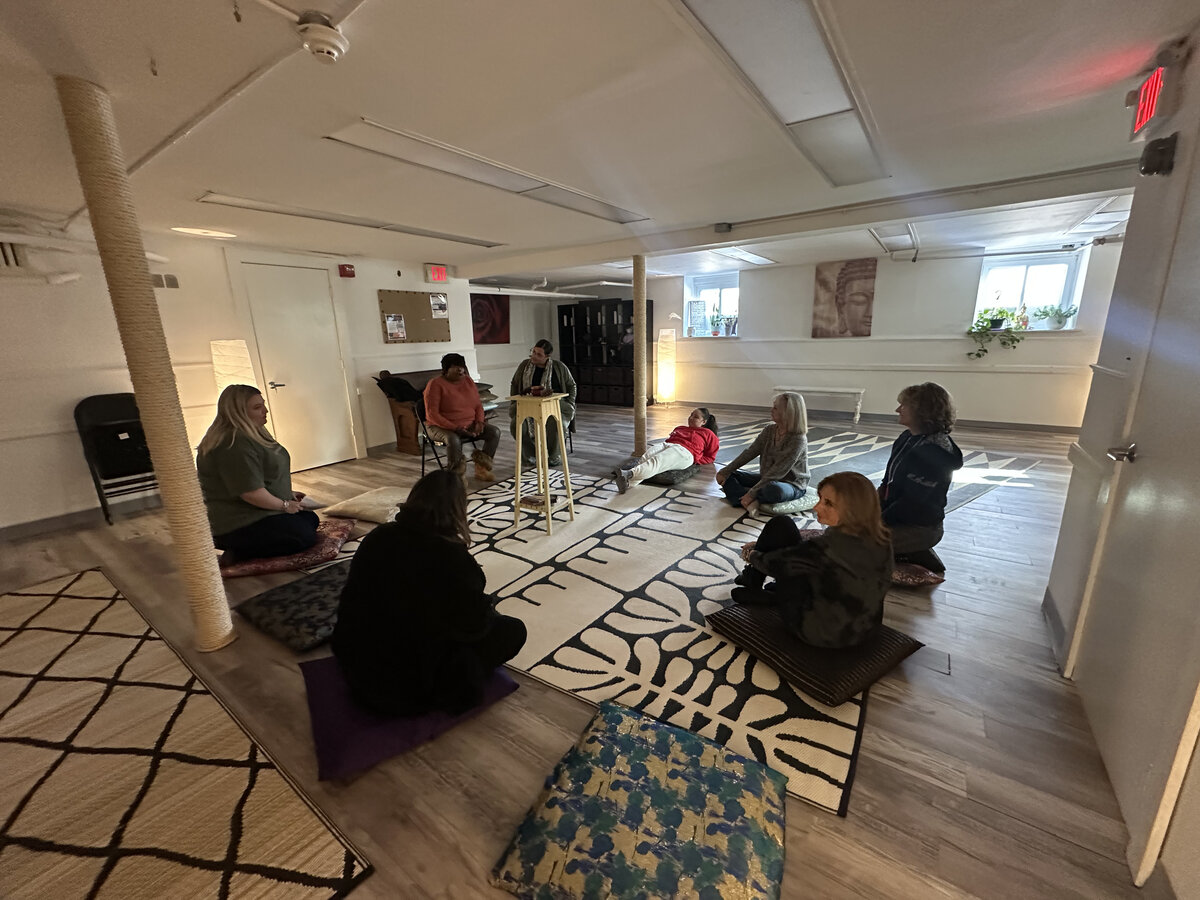
This is one of the primary reasons grief support groups exist — and one of the most compelling reasons they work. Not because they replace individual therapy or professional support, but because they offer something those cannot fully replicate: a room full of people who don't need you to explain yourself.
At Grief Unbound, we see the impact of group work consistently. This post is our honest case for why group support, for many grieving people in Bergen County and throughout northern NJ, is not just helpful — it may be the single most powerful resource available to them.
The Hidden Cost of Grieving Alone
American culture is not designed for grief. The U.S. has some of the shortest bereavement leave policies among wealthy nations — typically three to five days for the death of an immediate family member, according to the U.S. Bureau of Labor Statistics. After that, the expectation is productivity, presence, and a return to normalcy.
The result is that millions of people return to work, to school pickups, to errands and obligations while carrying acute grief — and they learn very quickly to mask it. The grief doesn't disappear. It goes underground, where it tends to intensify rather than diminish.
A growing body of bereavement research confirms that inadequate social support is one of the strongest predictors of prolonged grief, depression, and physical health complications after loss. Isolation doesn't just feel bad — it actively makes grief harder to move through.
There is also the social pressure to perform recovery. Well-meaning people often respond to visible grief with discomfort, which teaches bereaved people to hide their pain rather than express it. Over time, this creates a kind of double burden: the original loss, and the exhausting labor of concealing its ongoing weight from others.
Group support is a direct antidote to that isolation. It creates a structured, consistent, professionally held social container at exactly the moment when the natural social container — friends, family, colleagues — has thinned out or become uncomfortable with the ongoing nature of the grief.
What Makes Group Grief Work Clinically Effective
Grief support groups, when well-facilitated, are not simply people sharing sad stories in a circle. They draw on several well-established therapeutic mechanisms that have been studied extensively in the group psychotherapy literature.
Co-regulation
Humans are wired for co-regulation — the process by which one person's regulated nervous system helps calm another's. This is why being in a calm, supportive presence after a loss can feel physically relieving even without any specific words being exchanged. A grief group, held by a skilled facilitator, creates the conditions for this to happen repeatedly and consistently.
The Polyvagal Institute describes co-regulation as a biological imperative — humans are not designed to regulate their nervous systems alone. In grief, when the nervous system is frequently dysregulated by waves of acute emotion, the co-regulating presence of a supportive group is not a luxury — it is a clinical asset.
Universality
One of the most consistently cited therapeutic factors in group work is what psychologist Irvin Yalom called universality — the discovery that you are not alone. For grieving people who have felt invisible, like a burden, or like their grief is too much for others, hearing someone else describe exactly what they have been feeling can be a genuine turning point. It is hard to overstate how relieving it is to stop feeling like the only one.
Yalom's landmark research on group therapeutic factors, documented in The Theory and Practice of Group Psychotherapy, identifies universality as one of the most powerful mechanisms of group healing — particularly in the early stages, when isolation has been most acute.
Shared language
Grief has a vocabulary that most people around a bereaved person don't speak fluently — the secondary losses, the grief bursts, the anniversary reactions, the complicated feelings toward the person who died. In a grief group, this language is shared from the first session. You don't have to translate your experience into terms others will find comfortable, or edit out the parts that feel too dark or too complicated.
Altruism and restored agency
In individual therapy, you receive support. In a group, you also give it — and that act of giving has its own therapeutic value. Offering perspective, validation, or simply your full presence to another grieving person can restore a sense of meaning, agency, and usefulness that loss frequently strips away. Many group members report that this reciprocal dimension becomes one of the most meaningful parts of participation.
Instillation of hope
A grief group holds people at different points in their grief journey. Seeing someone who was where you are now — six months ago, a year ago — carrying their grief differently, re-engaged with life, still honoring their loss — provides concrete, embodied evidence that movement is possible. This is different from being told “it gets better.” It is witnessing it.
Group vs. Individual Therapy: Different Kinds of Healing
Individual grief counseling and group support address different dimensions of grief. Individual therapy provides depth, privacy, and the ability to work through the specific psychological and somatic layers of your particular loss. Group support provides breadth, community, and the lived experience of people who are walking the same road — which is its own form of healing that depth alone cannot produce.
It is worth naming what individual therapy does especially well. The private therapeutic relationship creates room to explore material that may not be ready for a group setting — childhood losses that resurface with a new death, complicated or ambivalent feelings about the person who died, or trauma interwoven with grief that requires careful, individualized clinical attention. For that kind of deep, specific work, the one-on-one relationship is often irreplaceable.
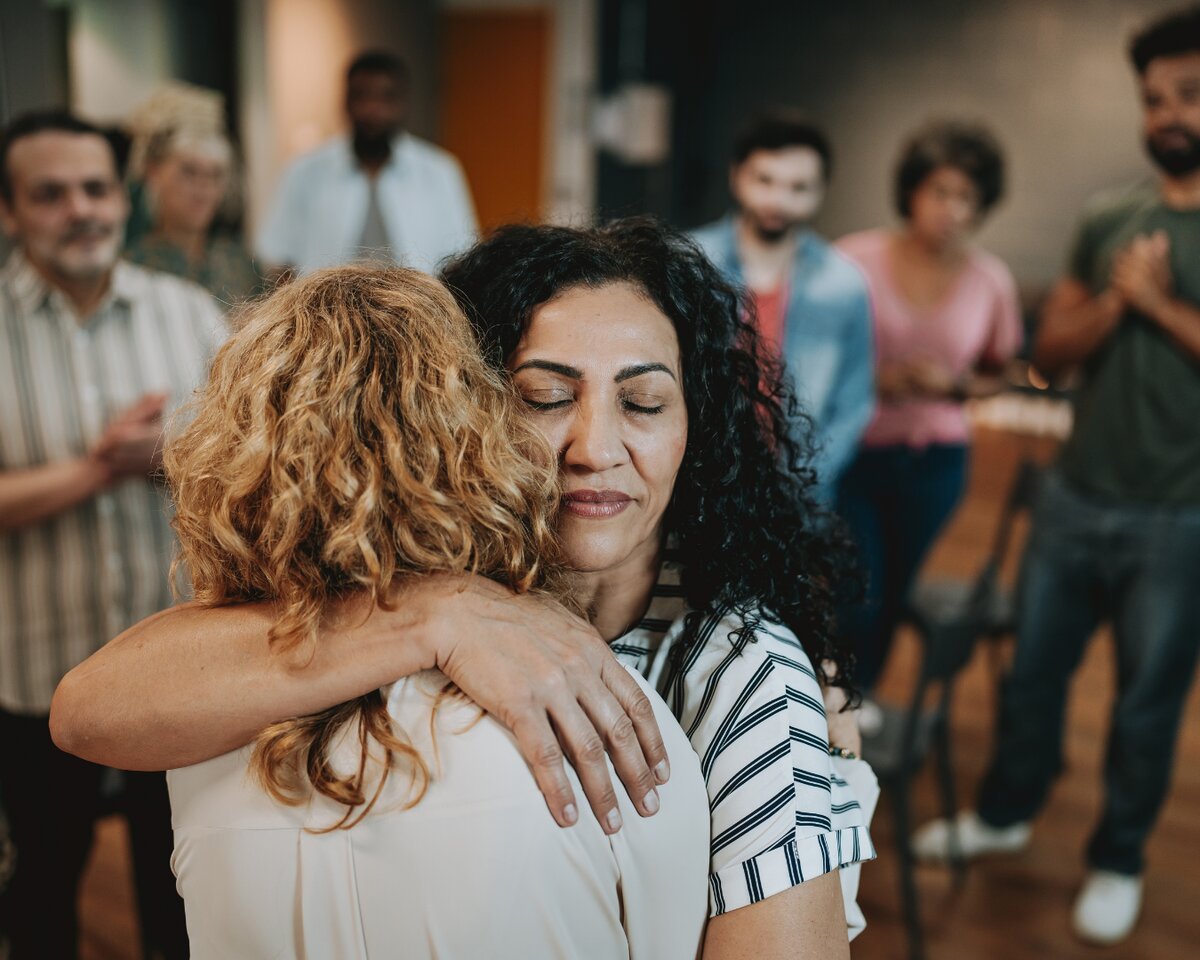
Group support, by contrast, does something individual therapy structurally cannot: it places you inside a community of people who genuinely understand. That horizontal connection — peer to peer, not just client to clinician — activates different aspects of healing. The experience of being truly known by multiple people, rather than just one, carries its own therapeutic weight.
Many people use both — often beginning with individual counseling to stabilize and build coping resources during the acute phase, then adding group support as they are ready for the communal dimension of healing. At Grief Unbound, we help clients think through which combination makes sense for where they are.
Common Fears About Joining a Grief Group — Addressed
Most people who would benefit from a grief group hesitate to join one. The fears are understandable and worth naming directly, because they often prevent people from accessing one of the most powerful forms of support available.
“I don't want to cry in front of strangers.”
Tears in a grief group are not unusual — they are expected and accepted without discomfort. Most people find, after their first session, that being seen in their grief by others who genuinely understand it is a relief rather than an embarrassment. The group context normalizes emotional expression in a way that most social environments do not.
“What if my grief isn't as bad as everyone else's?”
Grief is not a competition, and groups do not function as such. People across the full spectrum of loss — recent and long-term, expected and sudden, death and non-death — often find that comparison gives way quickly to connection. The common thread is the experience of loss, not its severity or circumstances.
“I'm a private person.”
You are never required to share more than you choose. Many group members find that listening and witnessing — without speaking — is itself deeply therapeutic. You do not have to perform grief or process out loud to benefit from a group.
“I don't know if I'm ready.”
There is rarely a perfect moment of readiness. Most facilitators recommend an initial intake conversation before the first group session — a chance to assess fit, address concerns, and enter the group with some familiarity rather than as a complete stranger to the process.
“I tried something like this before and it didn't help.”
Not all grief groups are the same. An online forum, an informal community gathering, and a clinician-facilitated therapy group are fundamentally different experiences. If a previous group felt too loose, too unstructured, or not therapeutically grounded, that experience may not reflect what a professionally facilitated bereavement group offers.

What Grief Unbound's Group Support Looks Like in Bergen County
At Grief Unbound, our grief groups are facilitated by licensed clinicians who specialize in bereavement. We don't use a one-size-fits-all format. Sessions are structured to create safety before depth — we do not push people into vulnerability before they have had a chance to build trust with the group and the facilitator.
Our approach integrates the core elements of talk therapy and CBT-informed tools alongside somatic awareness — helping group members process not just the cognitive and emotional dimensions of their grief but also notice how it lives in the body, and how the group experience itself can help regulate that.
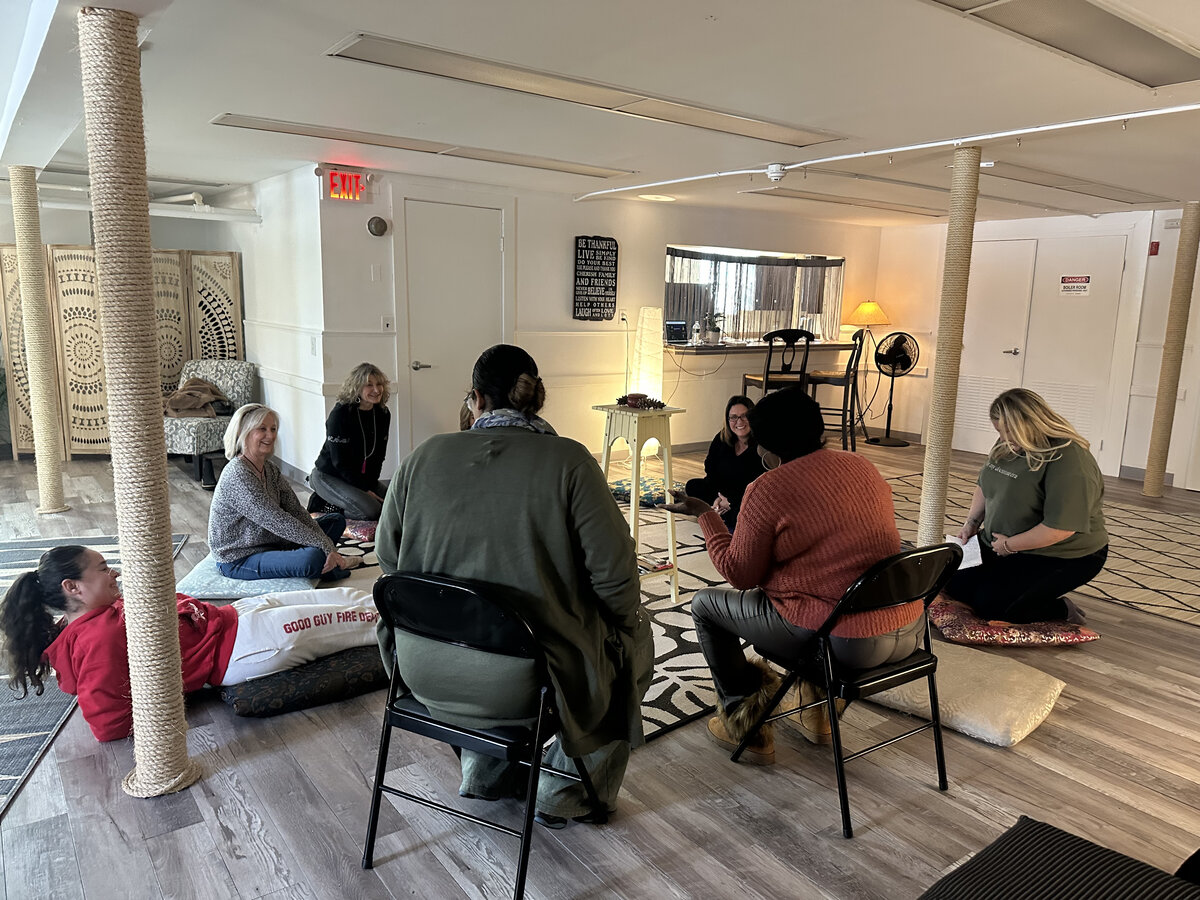
Groups are held in person in Bergen County and via HIPAA-compliant telehealth for NJ residents who prefer remote participation. We maintain intentionally small group sizes — typically 6–10 members — to ensure every participant has genuine space rather than being one voice among many.
We also recognize that different losses call for different containers. Our groups are organized thoughtfully, and our clinical team works during the intake process to ensure that the group you are placed in will feel like a meaningful fit — not just in terms of loss type, but in terms of where you are in your grief. For those experiencing prolonged or complicated grief, our clinicians are trained in specialized approaches that go beyond standard bereavement support.
Curious if a grief group is right for you? Book a free 15-minute discovery call and a member of our team will help you find the right fit for your loss and where you are in your grief: Book a Free 15-Minute Call.
Or call us directly at (201) 708-8448 — you can reach Melanie, our founder, to talk through where you are and find the right starting point.
Disclaimer: This blog post is for informational purposes only and does not constitute professional mental health advice, diagnosis, or treatment. If you are in crisis, please call or text 988 (Suicide & Crisis Lifeline) or contact a licensed mental health professional immediately.