
You are watching your father forget your name. He still smiles when you visit, but the man who taught you to ride a bike is already gone — and the man who is left looks at you sometimes like you are a kind stranger.
You are caring for a spouse with terminal cancer. The doctors have given you a timeline. You are simultaneously planning what to make for dinner and whether to have the funeral indoors or outdoors. Both are equally pressing.
You are watching a beloved pet decline. Each day might be the last. You haven't slept properly in weeks.
You are grieving — even though no one has died.
This is anticipatory grief. And it is one of the most exhausting, confusing, and unrecognized forms of loss a person can experience. If you have landed here because something about your current caregiving feels like grief but you can't quite name it — you are in the right place.
What Anticipatory Grief Is — and What It Is Not

Anticipatory grief is the grief that begins before a loss occurs — typically when you are caring for or close to someone who is dying, or whose identity is being progressively erased by illness, dementia, or disability.
It is real grief. It involves the same emotional, physical, and cognitive processes as grief after death. Organizations like the Hospice Foundation of America recognize it as a legitimate, often profound experience within end-of-life care research.
And yet, because the person is still alive, anticipatory grief tends to be invisible. People around you may say things like "but they're still here, focus on that," or "you'll have time to grieve later." These responses, however well-intentioned, miss the truth: the grief is happening now, whether or not it is recognized.
What anticipatory grief is not
It is not premature mourning. It is not "giving up" on the person. It is not a failure of hope. It is not selfishness.
Anticipatory grief is the natural response of a loving person to a slow loss. It coexists with hope, caregiving, presence, and love. In fact, it is often most intense in the people who are most engaged in the dying person's life — which is why caregivers carry such a disproportionate share of it.
This form of loss is also closely related to what researchers call disenfranchised grief — grief that society fails to acknowledge or validate. The invisibility compounds the pain.
Who Experiences Anticipatory Grief — and Why Dementia Is Different
The most common contexts for anticipatory grief include:
Caregivers of those with terminal illness
Spouses, adult children, and partners of people with terminal cancer, ALS, advanced heart disease, end-stage organ disease, or other progressive conditions. The grief begins with diagnosis and continues through the entire illness arc — it does not wait for a final prognosis.
Dementia and Alzheimer's caregivers
This is perhaps the most prolonged and complicated form of anticipatory grief. It is also a textbook example of what family researcher Pauline Boss calls "ambiguous loss" — the person is physically present but psychologically absent, leaving the family in a perpetual state of unfinished mourning. Caregivers often describe losing the person many times over, in stages: the first time they didn't recognize a name, the first time they couldn't follow a conversation, the first time the eyes went blank. There is no singular moment of loss. There is only an ongoing, accumulating one.
Families of those with serious chronic illness
Long-term illness without an immediate prognosis still creates grief — for the life that is no longer possible, for the person they were before, for the relationship as it once was.
Pet anticipatory grief
The decline of a beloved pet — through age, illness, or end-of-life care — triggers anticipatory grief for many. It is no less real than grief for human loved ones, though it is often even more invisible to others.
Anticipating identity or life transitions
Less commonly named but equally real: anticipating retirement, an empty nest, a relocation, a relationship ending, the loss of an ability. These can carry anticipatory grief too.
According to AARP's caregiver research, more than 53 million Americans are providing unpaid care to an adult or child with special needs — and the vast majority of them are grieving in some form right now, without that grief being named or supported.
Why Anticipatory Grief Is Especially Hard — and What Actually Helps

Several factors make this form of grief particularly difficult:
- Exhaustion. You are usually the primary caregiver. You don't have the luxury of falling apart. The grief has to be metabolized while you are also doing the cooking, the medication management, the medical appointments, the difficult conversations.
- Complicated emotions. Anticipatory grief often includes feelings most people are afraid to admit out loud: relief that an end is in sight, anger at the dying person, guilt for wanting it to be over, resentment about the burden of caregiving, even moments of dark humor. These emotions are normal. They do not mean you don't love the person.
- Social invisibility. Because the person hasn't died, others often don't recognize that you are grieving. There is no bereavement leave for the year of slow decline. Friends may think "well, they're still alive" and not check in. This makes anticipatory grief one of the most common forms of disenfranchised grief — grief that society does not acknowledge.
- Anticipating multiple losses. You are grieving the future you had planned. The version of the person they used to be. The relationship as it was. Yourself, before this. And the actual death that is coming. All at once.
The ambiguous loss framework
Pauline Boss's research on ambiguous loss is essential reading for anyone in this experience, especially dementia caregivers. Her central insight is that some losses cannot be resolved through traditional grief processes because there is no clear ending. The person is gone, and not gone, simultaneously. The mistake is trying to force closure where closure isn't possible. The work, instead, is to learn to hold the ambiguity itself — to grieve what is gone while continuing to love what remains.
Common feelings and what they mean
If you are experiencing anticipatory grief, you may notice:
- Emotional numbness or detachment — a protective response, not a failure of love
- Sudden waves of intense sadness, often triggered by small reminders
- Anxiety about the future, including practical and existential fears
- Anger — at the illness, at the medical system, at the person, at yourself
- Guilt — for being tired, for wanting it to end, for moments of normalcy or even joy
- Relief in moments — and shame about that relief
- Hypervigilance about the person's symptoms or condition
- Loneliness, even when surrounded by people
- Physical symptoms — sleep disruption, exhaustion, gut issues, weakened immune function
These are not signs that something is wrong with you. They are signs that you are loving someone through a slow loss.
What doesn't help
Common responses that miss the mark:
- "Stay positive — they're still here."
- "Don't mourn before they're gone."
- "You'll have time to grieve later."
- "Be strong for them."
- "Have you tried [specific treatment]?"
Translation: most of these responses are about the speaker's discomfort with what you are experiencing, not what you actually need.
What helps
Naming the grief. Saying out loud, "I am grieving right now, even though they are still alive," is sometimes the first piece of medicine. It legitimizes what you are experiencing.
Specialized grief support. Therapists and counselors who understand anticipatory grief don't tell you to wait. They work with you now, while caregiving is happening. The training lineage of David Kessler — which our founder Melanie completed directly under him — explicitly addresses anticipatory grief alongside post-loss grief.
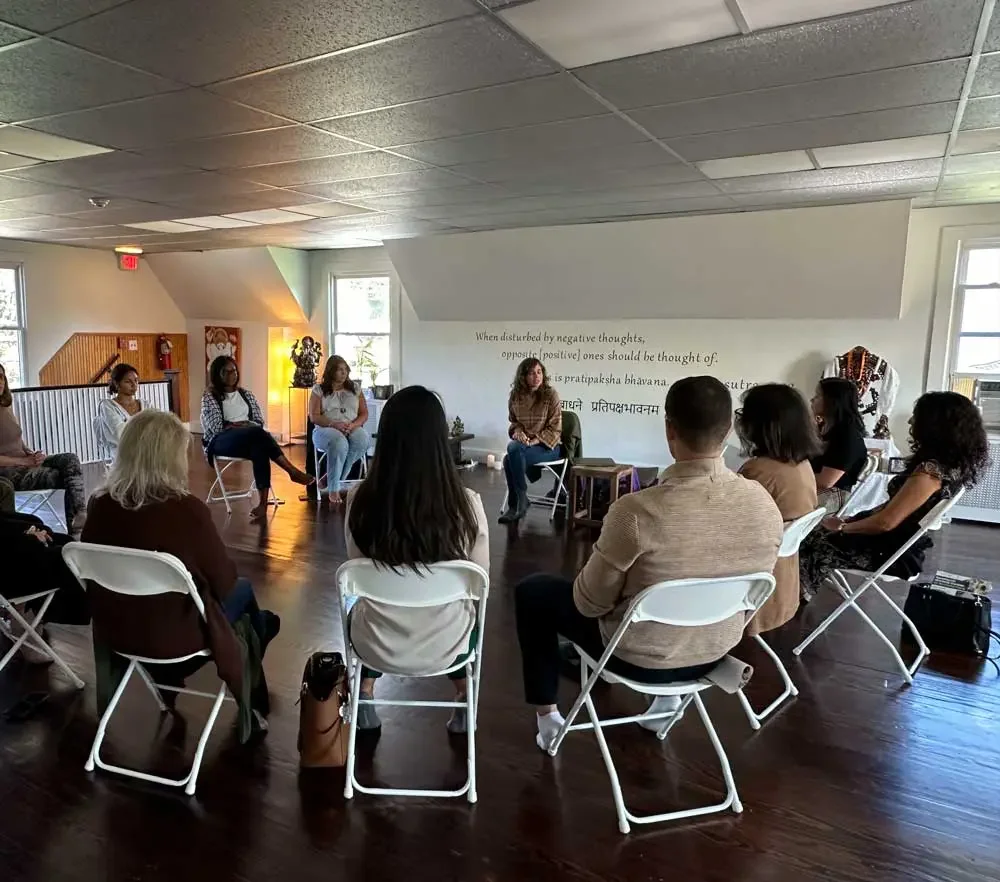
Connection with others in similar situations. Caregivers of those with dementia, terminal illness, or chronic conditions often find that no one understands their experience like other people in it. Grief support groups that include anticipatory grief can be transformative.
Self-care that is realistic, not aspirational. Forget about hour-long yoga classes if you can't get them. The question is: what is the smallest sustainable practice that helps you stay regulated? Sometimes it is a walk to the mailbox. Sometimes it is calling a friend. Sometimes it is letting yourself cry in the car.
Body-based practices. Anticipatory grief lives heavily in the nervous system. Breathwork, gentle movement, somatic yoga, sound healing, and acupuncture can offer relief that words alone cannot. Many of our clients integrate these alongside grief therapy.
Boundaries and respite. You are not abandoning the person you love by taking care of yourself. You are extending your capacity to be there. AARP's caregiver resources and most major hospice organizations identify caregiver respite as essential, not optional.
Permission for complicated emotions. Relief, anger, dark humor, and even moments of normalcy are all part of this. They do not mean you don't love them.
Frequently Asked Questions About Anticipatory Grief
What is anticipatory grief and is it normal?
Anticipatory grief is the grief that begins before a loss occurs — typically when caring for someone who is dying or whose identity is being erased by illness or dementia. It is completely normal. It involves the same emotional, physical, and cognitive processes as grief after death, and is recognized by hospice and palliative care researchers as a legitimate, profound experience.
Can you grieve someone who is still alive?
Yes. Grieving someone who is still alive is called anticipatory grief, and it is one of the most common — and least recognized — forms of loss. It is especially prevalent in dementia caregivers, who repeatedly lose the person in stages while the physical body remains present. This is not premature mourning. It is the natural response of a loving person to a slow loss.
Should I wait until after the death to start grief therapy?
No. Beginning grief work during the caregiving period — not after the death — is one of the most reliable protective factors against complicated grief or prolonged grief disorder. A grief therapist skilled in anticipatory grief will work with you now, while caregiving is happening, not ask you to wait.
What is the difference between anticipatory grief and depression?
Both can involve sadness, withdrawal, sleep disruption, and low energy — but they are not the same. Anticipatory grief is a response to a real, ongoing loss. Depression is a clinical mood disorder. They can coexist, and a skilled grief therapist can help you understand which you are experiencing and what kind of support fits. If you are unsure, that is itself a reason to reach out.
Is it wrong to feel relieved that the end might be near?
No. Relief is one of the most common — and most hidden — feelings in anticipatory grief. It is not a sign that you don't love the person. It is a sign that caregiving is exhausting, and that watching someone you love suffer is unbearable. Relief and love exist together. You do not have to choose between them.
You Don't Have to Wait for the Loss to Ask for Help
If anything here resonates, please don't wait until after. The work is more useful now.
Here is what beginning early looks like:
- Permission to grieve now. This is the foundation — naming what is already happening.
- A skilled witness. A grief therapist, a group, a peer who truly gets it.
- Body work. Practices that move grief through the nervous system, not just the mind — somatic yoga, sound healing, and acupuncture are available through our sister practice.
- Continued connection with the dying person, in whatever form is still possible. Many people find unexpected meaning in this final season.
- Realistic self-care, sustained over months. Not aspirational — sustainable.
- Support for after. Knowing what comes next reduces the dread of it.
Our team at Grief Unbound includes therapists trained specifically in anticipatory grief: Melanie Struble, LCSW (David Kessler-trained, 33+ years), Wendy Coffey, LCSW (33 years, family work), and Julia Tsakalis, LCSW (IFS and Brainspotting). Amanda Lohman Yeu and Alison Edsall are trained End-of-Life Doulas, available to work alongside families in the dying process itself.
Our grief support groups are explicitly inclusive of anticipatory grief — you are welcome before the loss, not just after.
According to AARP and the Hospice Foundation of America, caregiver grief is one of the most underrecognized public health issues of our time. You are not imagining the weight. And you do not have to carry it alone.
A free 15-minute discovery call is the easiest place to start. We listen. We don't rush. We help you figure out the right support — group, individual, body-based, or some combination — for the specific kind of grief you are carrying right now.
Call (201) 708-8448 or book your free discovery call online.
We are based in Saddle River and serve all of Bergen County, with telehealth available throughout New Jersey.