You have been told a grief support group might help. Or you have wondered, scrolling at 2 a.m., whether one might. And then the same question has stopped you both times: I don't know if I want to share my grief with strangers.
Almost everyone has this hesitation. It is the single most common reason people delay or avoid grief groups. And it is also, almost universally, the thing that turns out to be wrong about how groups actually work.
This guide is the honest walkthrough — what really happens in a grief support group, who is in the room, why community grief work is often more powerful than individual therapy, and how to know whether a group is right for where you are.
The hesitation almost everyone has
The two fears almost everyone brings to a first grief group:
- "I'll be expected to share things I'm not ready to share." This isn't true in any well-facilitated group. More on that below.
- "Other people's grief will overwhelm me." Also not how it usually works. The room teaches you to hold it.
There is also often a quieter, third fear: that being in a room of grieving people will be unbearable. Heavy. Crushing. That you will leave worse than you came.
What people who actually attend tend to report is the opposite. They describe leaving lighter, not heavier. Recognized, not exposed. Less alone, not more burdened. There is something in being witnessed by other people who genuinely understand that no individual session can replicate.
What a Grief Support Group Actually Is

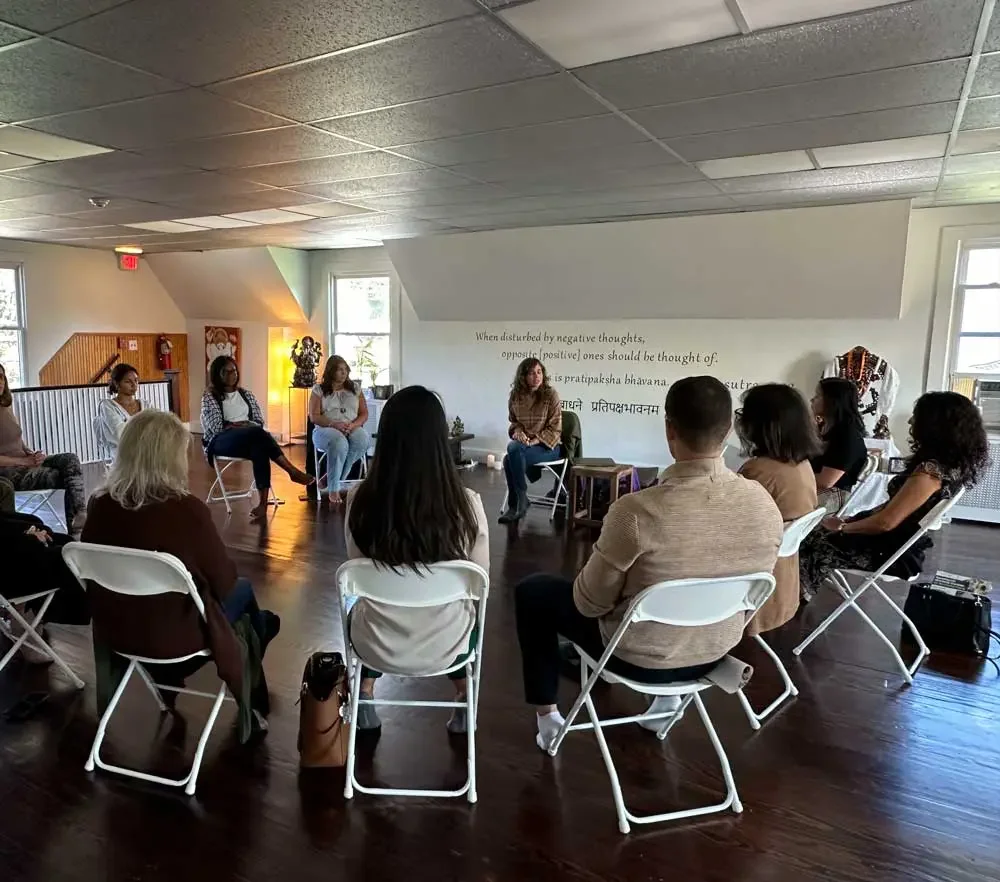
A grief support group is a facilitated, regular meeting of a small number of people who are navigating loss. It is led by a trained grief specialist. The structure varies, but most well-run groups share these features:
- Small. Typically 6 to 10 people, sometimes fewer.
- Regular. Often weekly or biweekly, with consistent attendance creating safety.
- Facilitated. A licensed clinician or trained grief specialist holds the space, sets the tone, and ensures the group remains supportive — not advice-giving or competitive.
- Confidential. What is shared in the room stays in the room.
- Time-bounded. Each session usually runs 60 to 90 minutes.
- Open or closed. Some groups welcome new members at any time (open). Others form as a cohort and run a fixed set of sessions together (closed).
At Grief Unbound, groups are the core program — they are not an add-on. The model is built around the conviction that community is the foundation of grief healing. National grief organizations like The Compassionate Friends (focused on child loss) and NAMI have spent decades demonstrating what we see weekly: people grieve better with each other than alone.
Who is in the room
This is the question most people most want answered, and the answer is more reassuring than expected: people very much like you.
The room typically contains:
- People recently bereaved (within the last few months)
- People further along in their grief (a year, two years, sometimes more)
- People grieving the same kind of loss as you, though in different relationships
- People grieving differently — different losses, different ways of expressing it
What is consistent: everyone is there because they understand grief. No one will tell you to "be strong" or "move on." Everyone in the room has needed exactly what you need: to be witnessed.
What Happens During a Grief Support Group Session

Group structures vary, but a common shape across well-facilitated grief groups is:
Opening (10 minutes)
A grounding exercise — sometimes a short breath practice, a moment of silence, or a brief check-in. Members say their name and, if they wish, a sentence about how they are arriving.
Theme or topic (10 to 20 minutes)
The facilitator may introduce a theme — anniversaries, secondary losses, the body in grief, complicated relationships — or simply open the floor. The theme gives people a way in if they want one.
Sharing (30 to 45 minutes)
This is the heart of the session. Members share what they are experiencing, what came up in the past week, or what they are sitting with. The facilitator manages time so everyone who wants to speak can. No one is required to speak. Listening is also valid participation.
Closing (10 minutes)
A brief integration moment — sometimes a closing reflection, sometimes a body-based practice to help the group transition out. Members are invited to acknowledge what they are taking with them.
You leave knowing what comes next: when the next group meets, who you can contact between sessions, what resources are available.
What you do not have to do
This is essential, because it removes the barrier most people get stuck on:
- You do not have to speak. Silent attendance is welcomed and respected.
- You do not have to share specific details of your loss. You can speak about how you are now without ever describing what happened.
- You do not have to cry. You also don't have to hold it in.
- You do not have to have it figured out. Showing up uncertain is the whole point.
- You do not have to know what kind of grief you have, what stage you are in, or what you need. The group is designed for people who don't know.
- You do not have to commit forever. Try one session. Try three. Decide from there.
Why Community Grief Work Is Often More Powerful Than Individual Therapy
Here is the part most people don't know going in: research on grief consistently finds that group-based interventions are particularly effective for grief, often more so than individual therapy alone — especially for prolonged or complicated grief. This isn't surprising once you see why.
Recognition
A skilled therapist can recognize your loss. A room of peers who have lived through similar grief recognizes it differently — at a level deeper than language.
Co-regulation
The nervous system regulates partially through being in proximity to other regulated nervous systems. Grief, which is profoundly dysregulating, responds to the steady presence of others who understand. This is what trauma researchers call co-regulation, and it is one of the most potent forms of healing the body has access to.
Universality
Grief is profoundly isolating. Hearing others articulate things you thought only you felt is a particular kind of medicine. I thought I was the only one who felt that. This single sentence has changed thousands of grief trajectories.
Multiple mirrors
Individual therapy gives you one mirror — your therapist. A group gives you many. Different members illuminate different parts of your experience. You get a fuller view of yourself.
The witness function
David Kessler, under whom our founder Melanie Struble trained directly, often says that grief unwitnessed is grief that gets stuck. Groups solve the witness problem at scale.
Hope
Newer members see what is possible from members further along. Members further along feel useful sharing what they have learned. The structure naturally creates hope without forcing it. The peer-grief organization Open to Hope, founded by Drs. Gloria and Heidi Horsley, has built decades of work around exactly this insight.
When a group may be more helpful than individual therapy first
Group support is often the right starting place if:
- Your loss is recent and you feel isolated
- The kind of loss you experienced is rarely understood by your normal community — suicide loss, overdose loss, miscarriage, disenfranchised grief
- You don't want to feel "clinical" or "diagnosed"
- You want connection and meaning more than analysis
- You have done individual therapy and feel stuck
- You are anticipating a loss and need a community (see our guide on anticipatory grief)
- Cost is a factor — groups are typically significantly more accessible than individual therapy
When individual therapy may be a better starting place
Sometimes individual work is the right beginning:
- You are in crisis or experiencing suicidal thoughts
- Your grief has become complicated grief or prolonged grief disorder and needs specialized clinical attention first
- You have significant trauma history that hasn't been addressed
- The thought of speaking in front of others creates severe anxiety
- You need scheduling flexibility that groups can't accommodate
The good news: individual therapy and group support are not exclusive. Many of our clients work with both — using individual therapy for the deep clinical work and groups for community, witness, and meaning.
Frequently Asked Questions About Grief Support Groups
Do I have to share in a grief support group?
No. In any well-facilitated grief group, silent attendance is fully valid participation. You do not have to speak, describe your loss, or explain what you are feeling. Many people attend several sessions before speaking and find that listening alone is profoundly helpful.
How is a grief support group different from individual therapy?
Individual therapy gives you one trained mirror — your therapist. A grief group gives you many: peers who have lived through similar loss and recognize your experience at a level deeper than language. Research finds group-based grief work is often more effective than individual therapy alone, especially for prolonged grief.
How much does a grief support group cost?
Grief groups are typically significantly more affordable than individual therapy sessions. At Grief Unbound, groups are deliberately priced to be accessible, and free programming is offered throughout the year. A free 15-minute discovery call can walk you through current costs and availability.
What types of loss are grief support groups for?
Grief groups exist for virtually every kind of loss: general bereavement, suicide loss, sudden loss, pregnancy and infant loss, pet loss, anticipatory grief, spousal loss, and loss of a child. Specialized groups serve losses that are rarely understood by a person's wider community.
Can I attend a grief group and individual therapy at the same time?
Yes, and many people benefit from both simultaneously. Individual therapy handles deep clinical work; the grief group provides community, witness, and meaning. They are not competing approaches — they are complementary, and many Grief Unbound clients use both.
How to Take the First Step Toward a Grief Support Group
Most people don't know whether a group is right for them — and they often won't know until they try one. The barrier in your head is almost always larger than the actual experience.
How Grief Unbound groups are structured
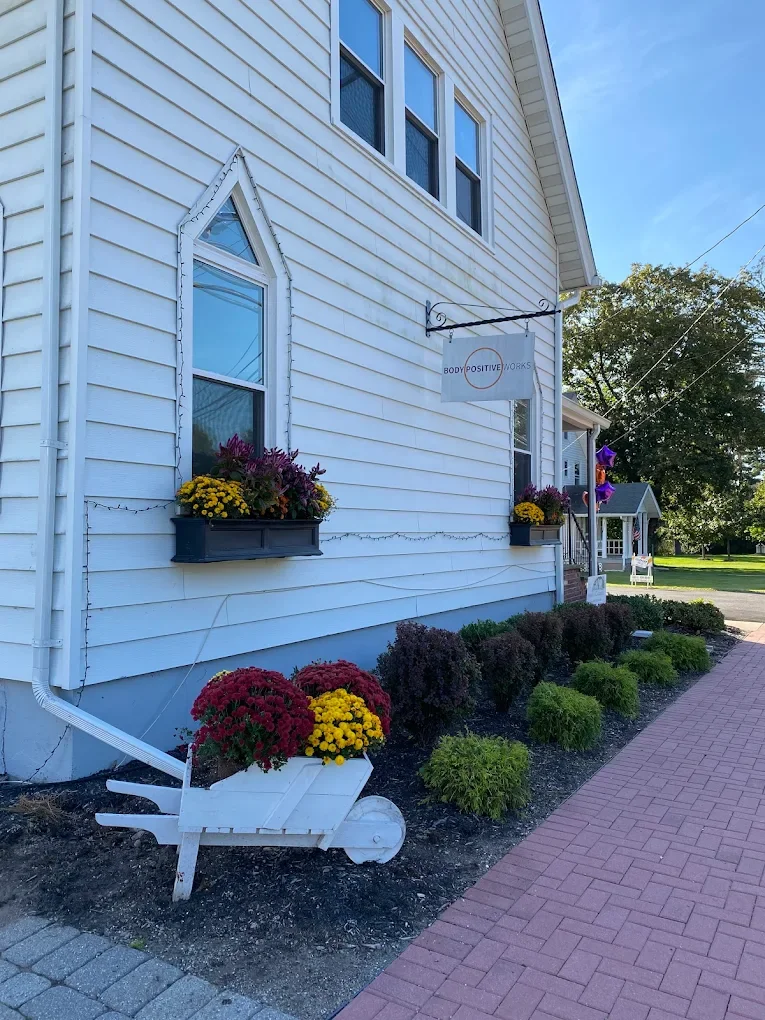
We offer multiple group formats at 96 Allendale Road, Saddle River NJ — convenient to Wyckoff, Ridgewood, Mahwah, Allendale, Ramsey, Paramus, Hackensack, Glen Rock, Fair Lawn, Ho-Ho-Kus, Waldwick, and Rockland County, NY. Many groups also offer secure telehealth participation for clients across New Jersey.
Specialized groups we frequently run include:
- General grief support
- Suicide loss survivors
- Sudden loss
- Anticipatory grief and caregiver support
- Pet loss
- Pregnancy and infant loss
- Partner and spousal loss
- Loss of a child (informed by community resources like The Compassionate Friends)
- Equine-assisted grief work with Wendy Coffey — one of the only practitioners offering this in Bergen County
- Sound healing for grief
- Somatic yoga for grief, drawing on the body-based modalities at Center for Mind Body Balance
- Mindfulness-based grief support, led by author and meditation teacher Mark Van Buren
The current group schedule is here.
What to bring
Practically: yourself. A water bottle. Tissues are provided. Internally: nothing. You don't need to prepare. You don't need to know what to say. Showing up is the whole prerequisite.
Begin with a conversation
Reaching out is the hardest part. Once you are in the room, the room teaches you how to be there.
Call (201) 708-8448 or book your free discovery call. No commitment. No pressure. Just a conversation about where you are and how we might walk alongside you.
You do not have to carry this alone. There is a room full of people who understand.