
You've decided you need help. You've also discovered that "grief counselor" is not a single thing. There are LCSWs and LMFTs and PhDs and certified grief specialists and grief coaches. There are practices that take insurance and practices that don't. There are individual sessions starting at $80 and starting at $300. There are large group practices and solo therapists, telehealth-only and in-person, religious and secular, somatic and cognitive.
How do you choose? And how do you choose well, when you're already grief-exhausted and decision-fatigued?
This guide is the framework. It walks through what actually matters in choosing a grief counselor, what questions to ask, what red flags to watch for, and how to think about cost — particularly in Bergen County, NJ, where options are abundant but quality and specialization vary widely. Whether you are navigating grief counseling after loss of a spouse, grief counseling for children and teenagers, or loss of any kind, this framework applies.
Why Grief Counseling Is Different From General Therapy

The first thing to understand: not every therapist is a grief specialist. A licensed clinical social worker who does excellent work with anxiety or couples may have minimal training in grief. They will be well-meaning but using a generic mental health framework that doesn't always fit.
Grief is not depression, though it can co-occur. It is not anxiety, though it often produces anxiety. It is not a disorder to be treated, though it can become complicated grief or Prolonged Grief Disorder. It is its own clinical territory, with its own evidence-based approaches and its own pitfalls.
A specialized grief counselor brings:
- Training specifically in bereavement and loss
- Familiarity with the non-linear nature of grief (no "stages" to march through)
- Understanding of disenfranchised grief, anticipatory grief, and complicated grief
- Trauma-informed approach (since many losses involve trauma)
- A philosophy of integration rather than "moving on"
- Knowledge of body-based and community-based supports that complement individual work
If grief is what brought you in, a grief specialist is what will serve you best.
Credentials, Modalities, and Specializations: What to Actually Look For

Credentials to look for
You will encounter several types of providers. Here is the practical translation:
- Licensed Clinical Social Worker (LCSW). Master's-level mental health clinician licensed by the state. Can diagnose, treat, and bill insurance independently. In New Jersey, this is one of the most common credentials for therapists, including grief specialists.
- Licensed Clinical Alcohol and Drug Counselor (LCADC). Specialized addiction credential, sometimes held alongside LCSW. Useful when grief is tangled with substance use, addiction, or eating disorders.
- Licensed Marriage and Family Therapist (LMFT). Specialized in family systems. Strong choice for family or couples grief work. Standards maintained by AAMFT.
- Licensed Professional Counselor (LPC). Master's-level mental health clinician with similar scope to LCSW.
- Psychologist (PhD or PsyD). Doctoral-level. Higher fees typically, deeper assessment training. Good fit for complex cases, neuropsychological concerns, or formal psychological evaluation.
- Psychiatrist (MD). Medical doctor; can prescribe medication. Most do not do primary therapy; they typically work alongside a therapist.
- Grief specialists / certified grief counselors. Specialized training on top of an underlying clinical license. Programs include training under David Kessler, the Columbia Center for Prolonged Grief, and others. Worth asking specifically about grief training, not just credentials.
- Grief coach. Not a clinical license. Can be valuable for support and meaning-making but should not be the only support for complicated or prolonged grief, trauma-related grief, or grief involving safety concerns.
For most people, the right starting point is a licensed clinician (LCSW, LMFT, LPC, or psychologist) with specific grief training.
Approaches and modalities
Grief work draws on several modalities. The good practices do not overcommit to one.
- Cognitive Behavioral Therapy (CBT) — adapted for grief. Useful for managing rumination, sleep disruption, and behavioral patterns that intensify grief. Less useful as the only modality.
- Internal Family Systems (IFS) / "Parts Work." Particularly powerful for ambivalent grief, complicated relationships, and grief layered on prior trauma.
- Brainspotting and EMDR. Trauma-focused modalities that work somatically. Especially helpful for sudden loss, traumatic loss, or grief tangled with PTSD-type responses.
- Compassionate Inquiry (Gabor Mate). Integrates somatic awareness, attachment theory, and trauma-informed inquiry.
- Somatic and body-based work. Somatic yoga, breathwork, sound healing, Reiki, acupuncture. These address what talk alone cannot reach.
- Group support. Often the single most under-utilized modality. Grief support groups provide community, witness, and co-regulation in ways individual therapy structurally cannot.
The strongest grief practices integrate multiple modalities rather than insisting on one.
Specializations to consider
Beyond general grief expertise, some kinds of loss benefit from specific specialization:
- Type of loss. Suicide loss, overdose loss, traumatic loss, perinatal loss, child loss, sibling loss, pet loss, and spousal loss all have particular dynamics. Ask what kinds of loss the counselor most commonly works with.
- Age population. Children and teens grieve differently than adults. Look for child/adolescent specialization if relevant.
- Trauma overlay. When the loss involved trauma, look for explicit trauma-informed training (Brainspotting, EMDR, Somatic Experiencing).
- Cultural or religious considerations. Some clients prefer a counselor who shares their cultural or spiritual frame; others find more freedom in someone who doesn't. Both are legitimate.
- Anticipatory grief. If you are caregiving for a loved one who is dying, look for someone explicitly skilled in anticipatory grief and end-of-life support.
The Insurance Question and What Grief Counseling Actually Costs in Bergen County
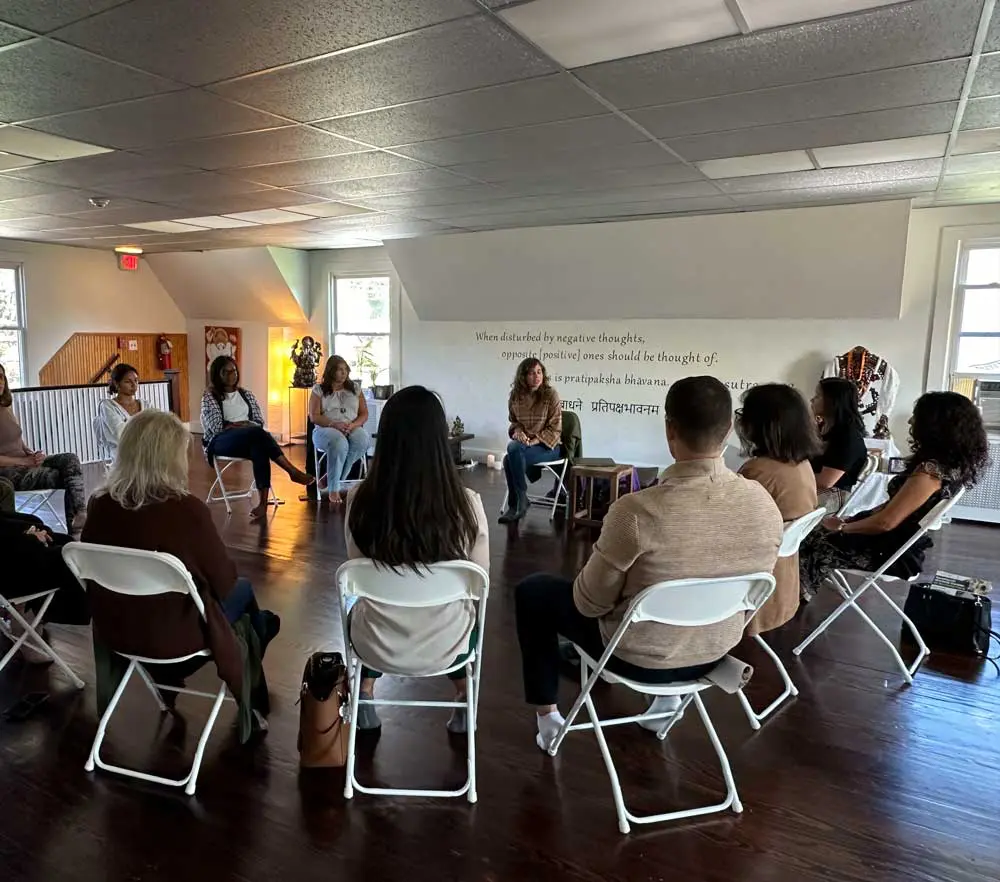
Most specialized grief practices in Bergen County, including Grief Unbound, are private-pay. This often confuses people. Here is the honest framing.
What private-pay means
The practice does not bill insurance directly. You pay the practice; you may submit superbills (itemized receipts) to your insurance for partial reimbursement, depending on your plan's out-of-network mental health coverage. Check your plan's out-of-network benefits before your first session — many PPO plans reimburse 50–80% after a deductible.
Why specialized grief practices often go private-pay
Insurance reimbursement requires a billable mental health diagnosis. Grief, by itself, is not a billable diagnosis. Even with the American Psychiatric Association's 2022 recognition of Prolonged Grief Disorder in the DSM-5-TR, PGD requires specific criteria that most clients don't meet. To bill insurance, providers often code grief as "adjustment disorder" or "major depressive disorder" — which a) may not be accurate and b) creates a permanent diagnosis on your medical record that can affect future life insurance, custody decisions, and other documentation. Private-pay protects you from this.
Cost ranges in Bergen County (as of 2025–2026)
- Individual therapy with LCSW/LPC/LMFT: $150–$250 per session
- Individual therapy with psychologist: $200–$350 per session
- Group sessions: $40–$80 per session
- Sliding scale: many practices offer this; ask directly
- Free options: support groups through hospice organizations, religious communities, and some community mental health centers
The cheapest grief support is not always the best, but the most expensive is not necessarily the best either. Fit and specialization matter more than cost within a reasonable range.
Red flags to watch for
- A therapist who pushes "stages" of grief or specific timelines
- Pressure to "move on" or stop talking about the deceased
- Lack of curiosity about your specific loss and relationship
- Discomfort with strong emotion (theirs or yours)
- One-size-fits-all approach
- Inability to refer out when their approach isn't working
- Heavy reliance on insurance-friendly diagnoses that don't fit
- Selling extensive packages or aggressive scheduling
- Disrespect for your pace
Green flags to look for
- Specific grief training mentioned on their website — or confirmed when you ask
- Comfortable with silence, intense emotion, and ambiguity
- Genuine curiosity about who the deceased was and who you are
- Willingness to integrate or refer to other modalities (group, body-based, etc.)
- Respect for your timeline
- Clear, transparent fees with no hidden costs
- A free initial consultation
- Willingness to discuss whether they are or aren't the right fit
- Connection to broader grief care infrastructure (community resources, grief support groups)
How to Evaluate Fit — and What to Ask on the First Call
Group vs. individual: what's right for you
Both. Often. At the same time.
Individual grief therapy provides depth, clinical precision, and dedicated time. Group support provides recognition, co-regulation, and community. They serve different functions, and most clients eventually use both. You can read more about what to expect in a grief support group and what to expect in your first grief counseling session before you decide.
If cost is a factor, group is often the most accessible starting point. If trauma or complicated grief is the primary concern, individual is often the right beginning. If you are unsure, the free 15-minute consultation is the easiest way to figure it out.
What to ask in the free consultation
Useful questions for a first call:
- What is your specific training in grief?
- Do you commonly work with the kind of loss I'm navigating?
- What modalities do you typically use?
- What does your typical pacing look like (weekly, bi-weekly, etc.)?
- How do you think about insurance and cost?
- Do you offer or refer to group support?
- What is your approach when grief is stuck?
- How do we know if we're the right fit?
A good counselor will welcome these questions and answer them clearly. Evasiveness about any of these is itself useful information.
Trusting your gut
After all the research, the actual decision often comes down to this: do you feel something open in you when you talk to this person? Not necessarily comfort — grief work is rarely comfortable — but recognition. A sense that you could let down some of the armor you've been carrying. A sense that they will know what to do with what you bring.
If you feel that in a 15-minute call, that is the most reliable signal. The credentials, the training, the price, the approach — all matter. But fit, in grief work, is the deepest predictor of outcome.
Frequently Asked Questions About Choosing a Grief Counselor in Bergen County NJ
How much does a grief counselor cost in Bergen County NJ?
Individual sessions with a licensed grief counselor in Bergen County typically range from $150 to $300 per session. Psychologists may charge $200–$350. Group grief sessions run $40–$80. Most specialized practices are private-pay, though you may submit superbills to your insurer for partial out-of-network reimbursement depending on your plan.
What credentials should a grief counselor have in New Jersey?
Look for a state clinical license — LCSW, LPC, LMFT, or psychologist (PhD/PsyD) — plus specific grief training beyond the base credential. Grief coaches are not licensed clinicians and are not appropriate as the sole support for complicated grief, trauma-related loss, or any situation involving safety concerns.
Does insurance cover grief counseling in NJ?
Most specialized grief practices in NJ are private-pay because grief alone is not a billable insurance diagnosis. Some practices provide superbills you submit to your insurer for out-of-network reimbursement. Billing insurance typically requires coding grief as a diagnosable disorder, which creates a permanent medical record that can affect life insurance and legal matters.
What is the difference between a grief counselor and a grief coach?
A grief counselor holds a state clinical license (LCSW, LPC, LMFT, or psychologist) and can diagnose, treat, and support complex or traumatic grief clinically. A grief coach holds no clinical license — they offer support and meaning-making but cannot treat complicated grief, Prolonged Grief Disorder, or grief tangled with trauma or safety concerns.
Should I start with individual grief therapy or a grief support group?
Both serve different functions and most people eventually use both. If trauma or complicated grief is the primary concern, individual therapy is usually the right starting point. If cost is a factor or you are craving community and witness, a group is often the most accessible and surprisingly powerful first step.
Beginning With Grief Unbound: Your Next Step in Bergen County
If this guide has been useful and Grief Unbound sounds like a possible fit, the simplest first step is a free 15-minute discovery call.
Here is what happens on that call:
- You tell us what you are carrying. We listen without rushing.
- We briefly walk through options. Which practitioners, which formats (individual, group, body-based, or a combination), and which might serve you best.
- You decide. No pressure, no commitment on the call itself.
We are based at 96 Allendale Road, Saddle River, NJ, serving all of Bergen County — including Wyckoff, Ridgewood, Paramus, Hackensack, Mahwah, Allendale, and Ramsey — with secure telehealth available statewide.
The full team list is on our website, along with the insurance and private-pay FAQ and everything you need to know about what to expect in your first grief counseling session.
The right grief counselor exists for you. The first conversation is fifteen minutes long.